
台東。Taitung.
And then Taitung for the summer.
A long way from Taipei’s bustle, 2 months gave me just enough time to explore the region.
Facing the Pacific on Taiwan’s east coast, mountains and rift valleys meet the ocean, creating a barrier that sheltered the region for centuries, preserving local indigenous traditions and a stunningly varied natural landscape.
Taking things slow, food was at the core of my experience - through the people I met along the way.





















Taitung Blogs.


Taitung Travel Stories. Pt. 1.
Old Taitung Station. Located in central Taitung, it's now a centre for art installations and local products.
Taitung Forest Park. Beaches in Taiwan are eerily deserted.
The Heat
Heat + More Heat. Roasting pork over coals in Taitung forest park.
Crackers in the Park. Park in the Crackers.
Sun Goes Down
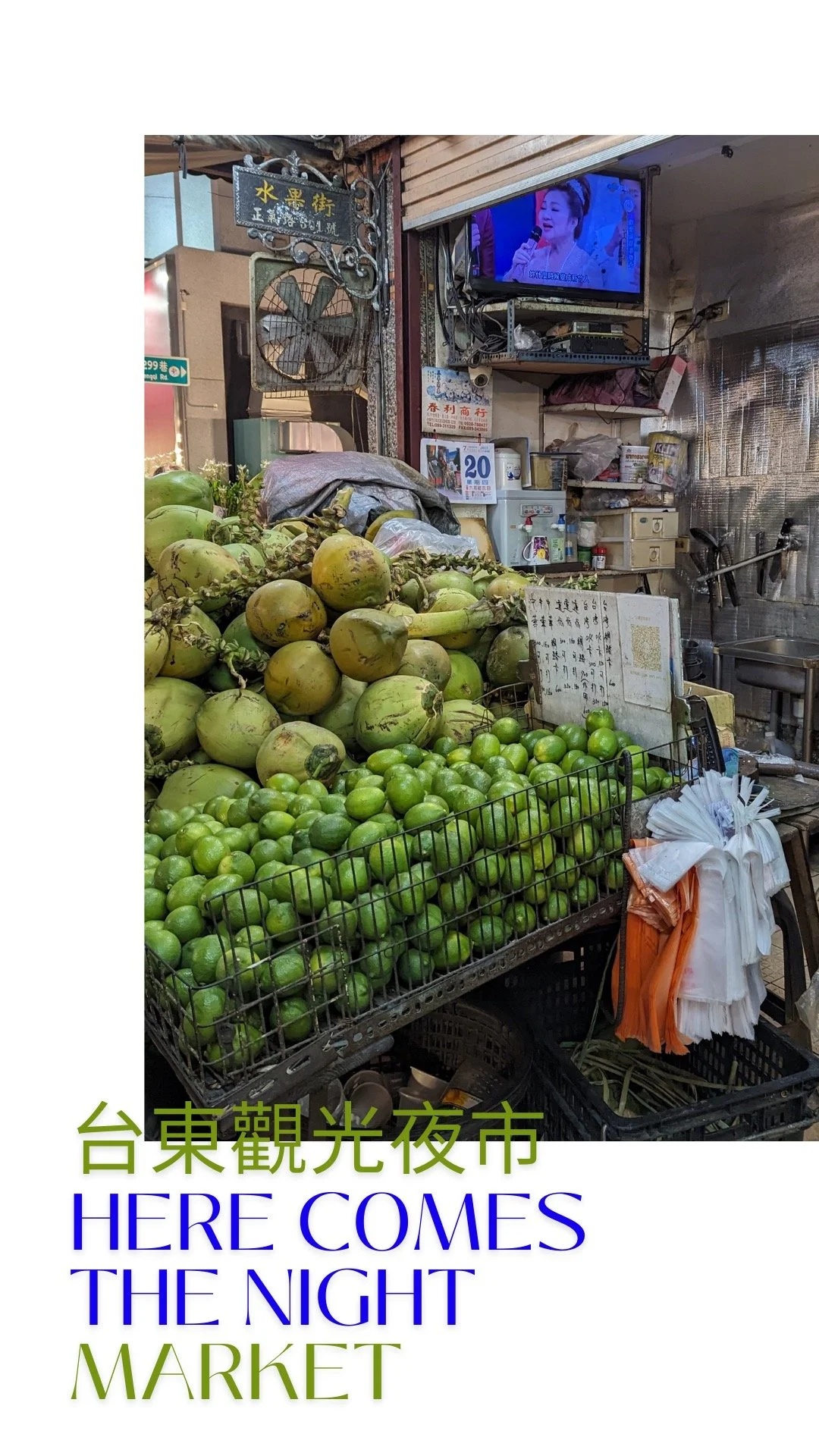
Stalls Come Out
Chicken Ass. What else? Favourite stall at the night market.
Scallions rolled in slices of lean marinated pork, then grilled. A night market staple in Taiwan.
Japanese Heritage
Green Mango
Red Mango
Crack.
'Round the Corner
A thin, crispy crust wrapped around a hefty amount of minced pork and chives. 豬肉餡餅
燒肉蛋餅, Dan Bing, the Taiwanese breakfast crêpe.
Shave ice with roselle (hibiscus) syrup and tangyuan, glutinous rice balls
Oceanside berries
Zongzi. First of many.
Stewed pork with preserved mustard greens. Soft and silky. 梅香颿庥飯
Low clouds
Typhoon clean-up
Post-typhoon sunburn
Donghe bridge
The Little White House
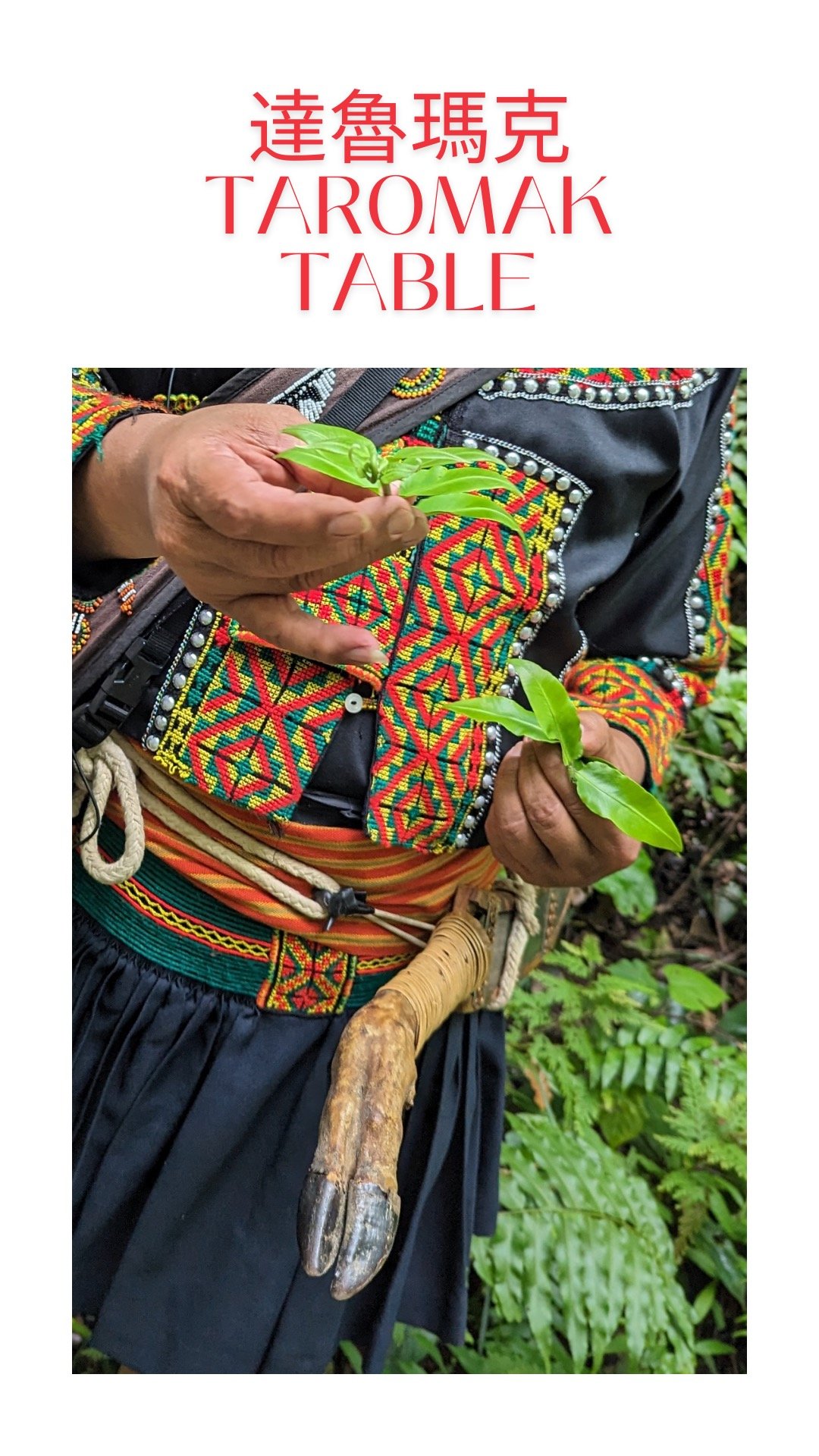
Foraging and barking deer handles
Abai (阿拜) - Taiwaneese millet dumplings. An indigenous staple. Edible apple-of-peru leaves wrapped around soaked millet and chunks of pork. Steamed for hours until soft and sticky. Encased in shell ginger leaves for structure.
Blood sausage (達魚琚克巾腸), heritage of hunting times at the Taromak (達魯瑪克) tribe in Taitung.
Went back for seconds
Sweet and chewy
Chenggong fish auction drama
Marlin sashimi. THICK. The specialty of 旗遇海味 (Meet Marlin) thanks to the experienced owner, a third-generation fish trader at Chenggong (成功) harbour.
Sailfish tail, bone-in, in a brown sugar molasses sauce. An unexpected discovery at 旗遇海味 (Meet Marlin) in Chenggong (成功).
鬼頭刀海菜魚丸湯. Fish balls in a clear, delicate broth with seaweed at 旗遇海味 (Meet Marlin), overlooking the harbour in Chenggong (成功).
Egg rolls with fish floss (魚鬆蛋捲) at 旗遇海味 (Meet Marlin) in Chenggong. Sweet with a hint of savoury. Crisp and crumbly.
Squid laid out in the sun, mid-drying
Old Japanese decour
Back in time
Mountain Longan (山龍眼), dragonfruit flower blossom (火龍果花) and chili sauce.
All into the plate. Dragonfruit blossoms with clams. The blossoms wee a first for me. Soft and chewy, reminiscent of asparagus with a flowery aroma. The stems retain their crunch and exude viscous mucilage.
Re-purposing car seats
Lily at her restaurant, Dawana
Whether used ceremonially as an offering together with rice wine or chewed for hours by the elders for their psychoactive effect, betel nuts are a common sight in Taiwan, with family-run stores selling them on the street, often open during typhoons too to cater for their devoted customers. In this instance, the nut was wrapped in the betel leaf, a dainty little green parcel. Gnaw off the top. Spit and buzz.
The aiyu fig (感玉) is native to Taiwan and parts of southeast Asia. The fresh fruit gets dried and the seeds rehydrated to get a refreshing jelly. The seeds are soaked in mineral-rich water and rubbed to release the pectin that sets into a bouncy. yellow jelly. Usually served chilled with syrup and citrus juice.
An open fire, stones that get heated and dropped in soup to warm up stocks and earth ovens to cook roasts and vegetables in layers over multiple hours. Cooking methods linking most Austronesian cultures.
Homemade oven to smoke meats. Wakam, the at of smoking meats, the knowledge of your wood types and timings passed down though generations.
A traditional steamer. One single hole at the bottom for long preparations. Wrapping starches in leaves, filling up bamboo tubes with rice.
Ocean view from Duoliang (多良)
Simple frames.
Siraw (席烙). Salted, raw pork belly. Simple as that. Traditional amis dish for events. important guests and celebrations. Sharp saltiness with a sweet edge.
Broken mirrors in the mountains
Just a lil' gig, getting ready for Taitung's Slow Food Festival in October 2023. Careful selection of local producers, chefs and restauranteurs working with local ingredients to highlight the best Taitung has to offer.
Pork and roselle meatball by Grace Kitchen @gracekitchentw for Taitung Slow Food Festival in October 2023
Pigeon pea mooncakes (樹豆椪) by 柴源製菓 (@chaiyuan_bakery) for Taitung Slow Food Festival in October 2023
Cocoa in Taiwan. Great nibs.
The millet at the bunun-owned 蓋亞那工作坊(Kaiana workshop) is cooked with chicken fat, turning it into a sticky porridge with a deep umami flavour. Reminiscent of the Italian corn polenta in alpine valleys, it was a great ice-breaker when discussing where I was from.
Qavay, paiwan millet dumplings made with fermented millet. Similar to abai (阿拜).. The paiwan tribe soaks their millet and lets it ferment for a day or two before pounding into a smooth. sticky dough that's then filled and wrapped in apple-of-peru leaves for aroma and shell ginger leaves for structure.
Dry the longans on the car, won't you?
Tragic scene
We love a frame.
Nighttime fishing by the ocean.
Dinner by the ocean. Traditional Amish recipes after the typhoon.
A beautifully rough blade and pork sprinkles on rice balls (Siraw - 席烙).
Behind the scenes. Amateurs taking pictures of photographers.
Lobster tails went directly from the soup to the grate to get grilled over a fierce fire.
Duality of Taitung Life. Dinner started with the sun, ended with umbrellas being left behind, little help against the brisk gusts.
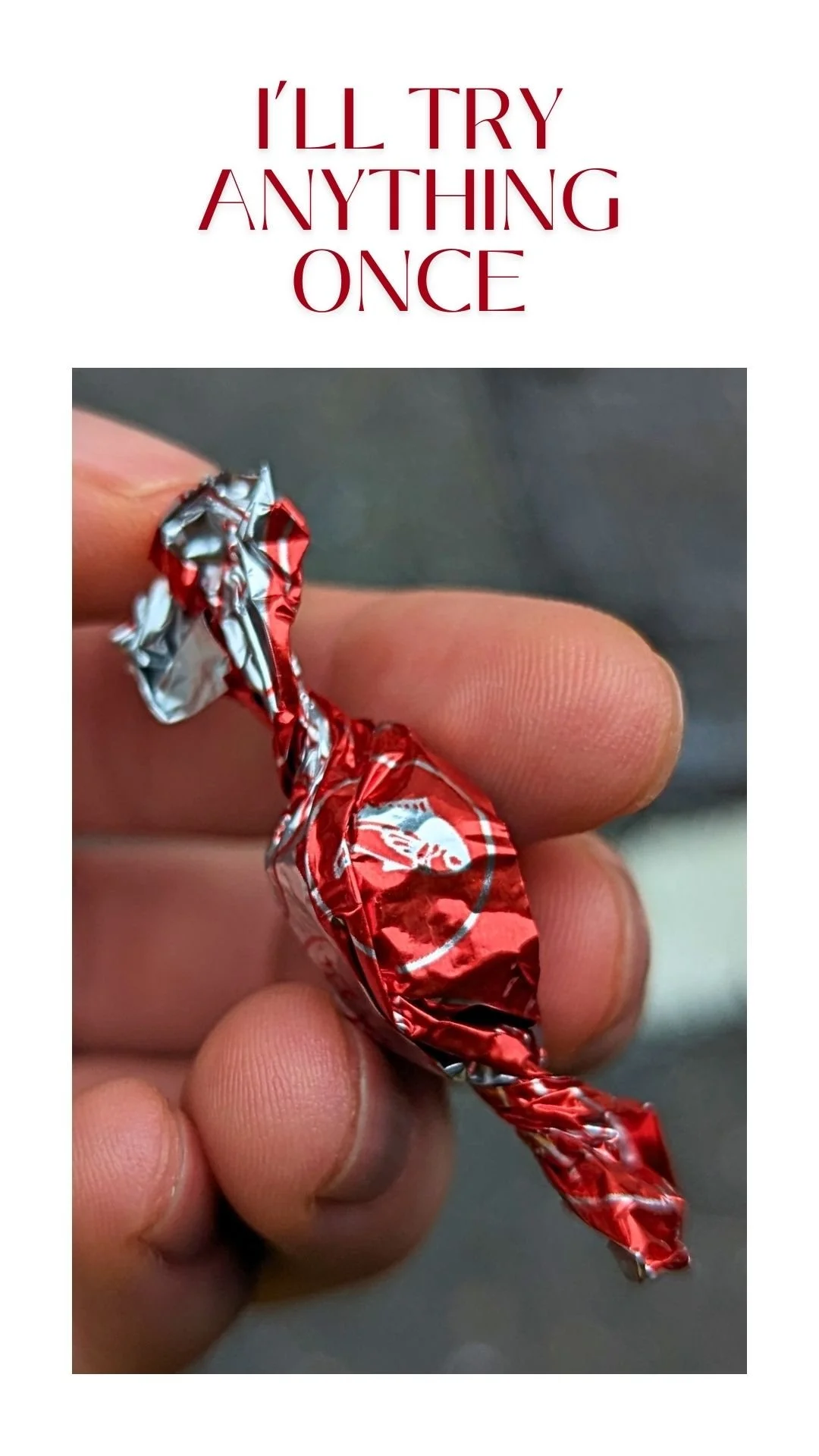
Little "candies" made of fish. Surprisingly mild, a pleasant interlude but definitely not a great substitute for a mint.
No. I always try everything I came across while on the road, but I draw the line at asparagus juice. Ubiquitous in 7 elevens in Taiwan, I've never seen anyone buy it, but it apparently has an aging core of enthusiasts, supposedly more into its health benefits than the bland, boiled asparagus water taste.

Familiar brands from the Nordics. Unexpected supermarket finds.
Rusty cars and pet chickens
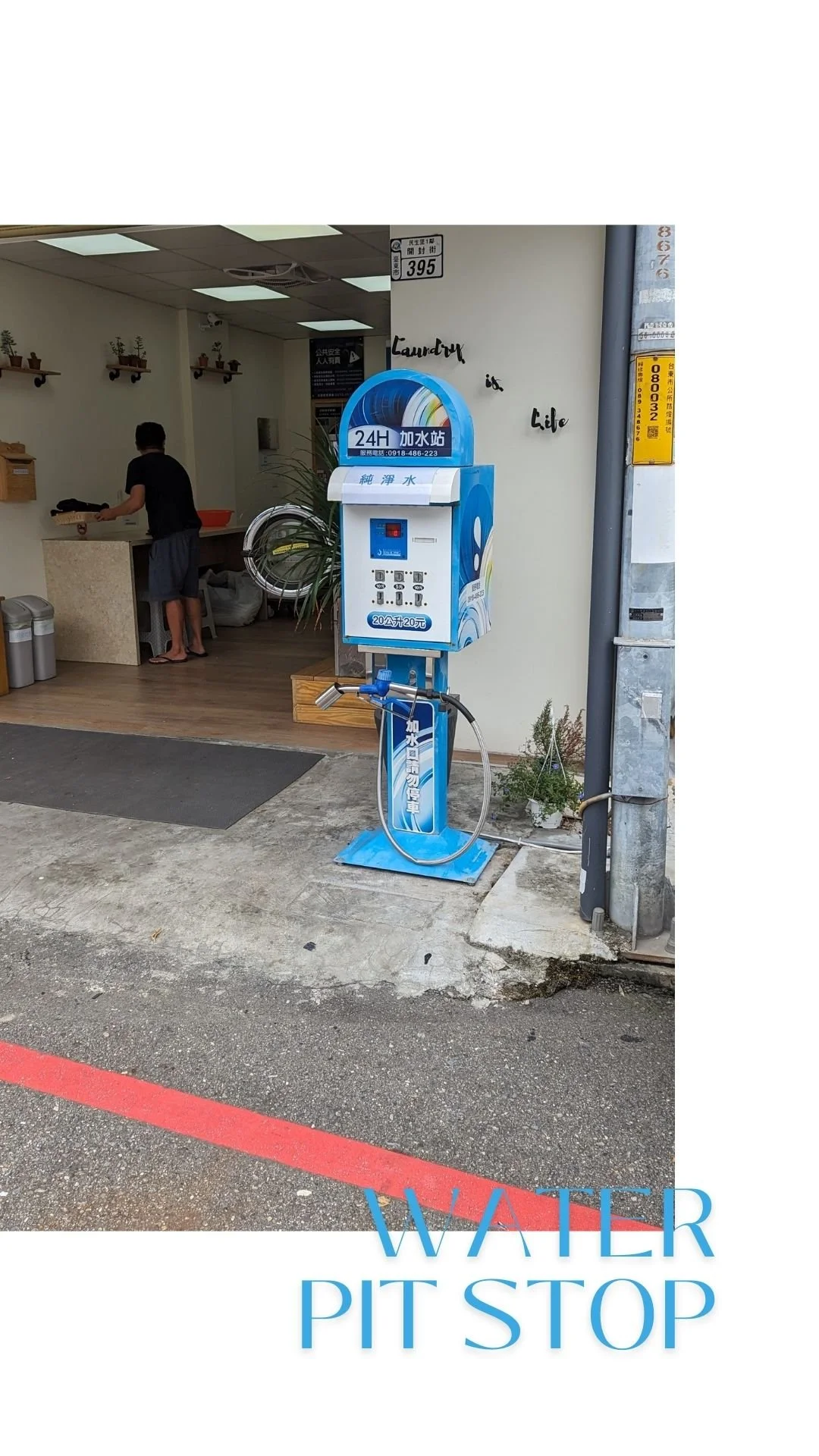
Water-vending machines dot the streets giving Taitung a certain Route 66 charm. Very easy to miss and overlooked by the locals.
The old sugar refinery in Dulan has been redeveloped and it turned into a hub for local artists to showcase their paintings or sell their creations.
Aiyu jelly is eaten cold, with syrup and lemon. Getting to the final product requires massaging the seeds in mineral-rich water until the pectin is released and letting it set into a jiggly gel. When professional-looking cheesecloths aren't available as vessels for the seeds, anything works. Even stockings straight out of a package.
And no one told me that wood-ear mushroom nectar is appreciated for the health benefits rather than its taste and texture. I took my time and sipped it like one would do with a gloopy glass of whiskey with suspicious-looking speckles in it - turns out most people chug it and are done with it within seconds. I understand why.
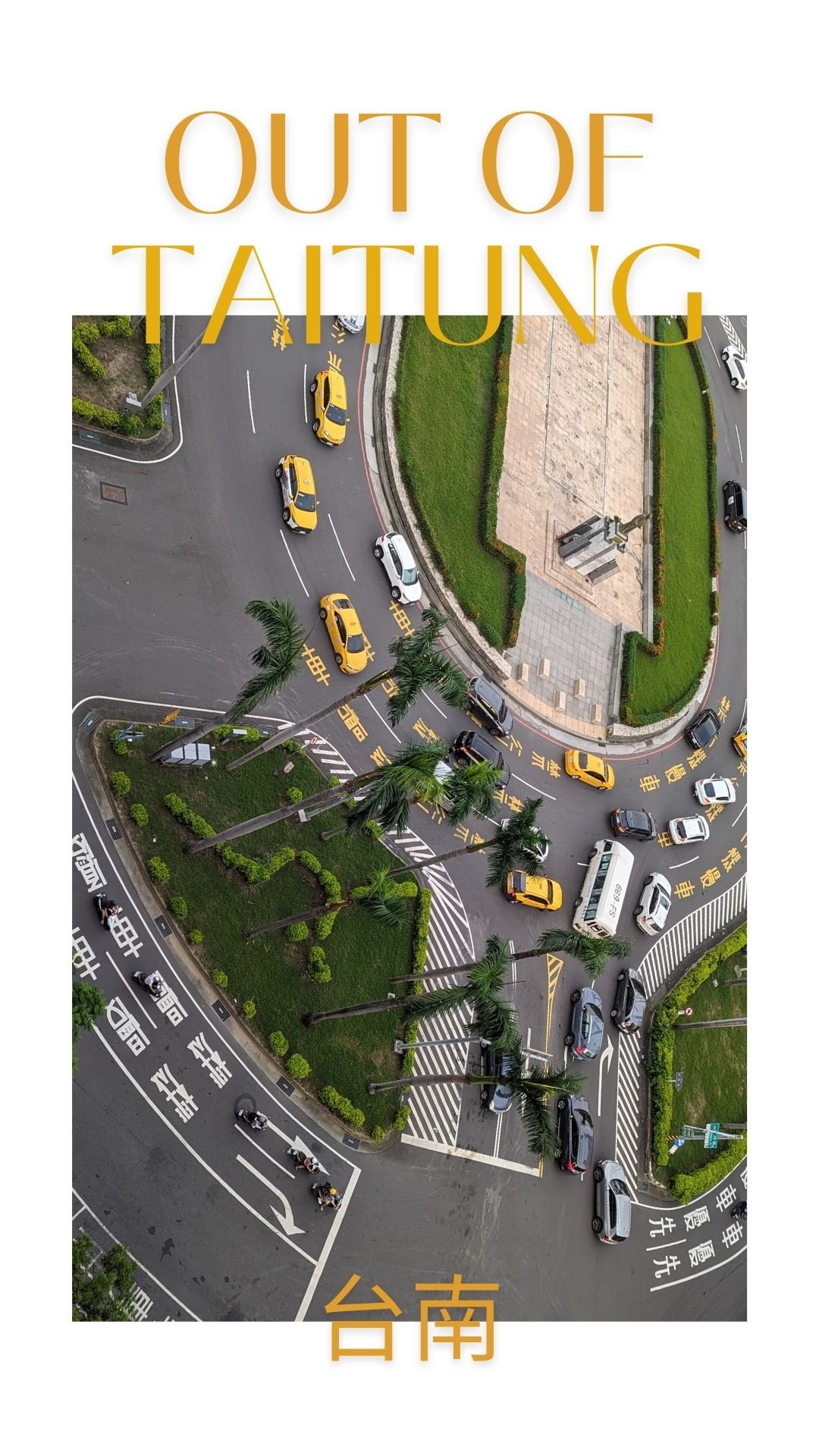
And then the end. Pit stop in Tainan on the way up to Taipei.
Tainan's known for its incredibly solid food scene. This stir fried mutton at Lao Tseng Mutton (老曾羊肉) was surprisingly delicate - tender, savoury enough to season the greens and to infuse the rice with umami flavour. A very efficient dinner touch-and-go. I see why it got a Michelin guide Bib Gourmand.
There's so much of my experience in Taitung in Clarissa Wei's Made in Taiwan. Knowing I ate my way through all the dishes mentioned in the book in less than 2 months spent in Taitung, seeing Aeles (Lily) in it and recognising myself in the struggle to figure out the labels for starches in stores. And meeting Wei and Ryan, the couple behind the food photography and food styling for the whole book during my last week in Taiwan by pure chance. I’m glad I’ll have the book going forward. It’ll be a bit like my Taiwanese diary.
Taitung Travel Stories. Pt. 2.
Back to Taitung, for a more temperate spring stint.
Slow Food Festival, reunions with old friends and a travel itinerary that showcased the local food production methods and the people that keep them alive.
The Wave House is one of Taitung City's landmark structures. Made of 50 shipping containers stacked under a light blue wave-shaped roof, it hosts several shops ad restaurants.
Taiwanese flags hanging. We're so back.
A new outlet for Meet Marlin (旗遇海味), the main restaurant by Chenggong harbour, 魚悠-波浪屋4號店 is a new fish restaurant that opened its doors in 2025 in Taitung City. A relaxed atmosphere right by Tiehua Village.
Brown sugar swordfish, Meet Marlin's signature dish. In the new downtown location at 魚悠-波浪屋4號店, the fish chunks are meaty and plump and the sauce is as complex as ever.
A special at 魚悠-波浪屋4號店, this was a black skipjack cheek, barely touched by the grill and prepared as if it were wagyu beef.
Flipping stools.
Some things are just a bit confusing to me.
Walking through the traditional central market in Taitung (台東市中央市場) to get breakfast, some of the sights are a bit gruesome for an early-morning stroll.
Peanut tofu at 台東有知鳥 (Hii Birdie) in Taitung. A small café in the old sugarcane factory, run by a lovely couple that settled in Taitung and decided to open their own café after years of hustle and bustle in Taipei.
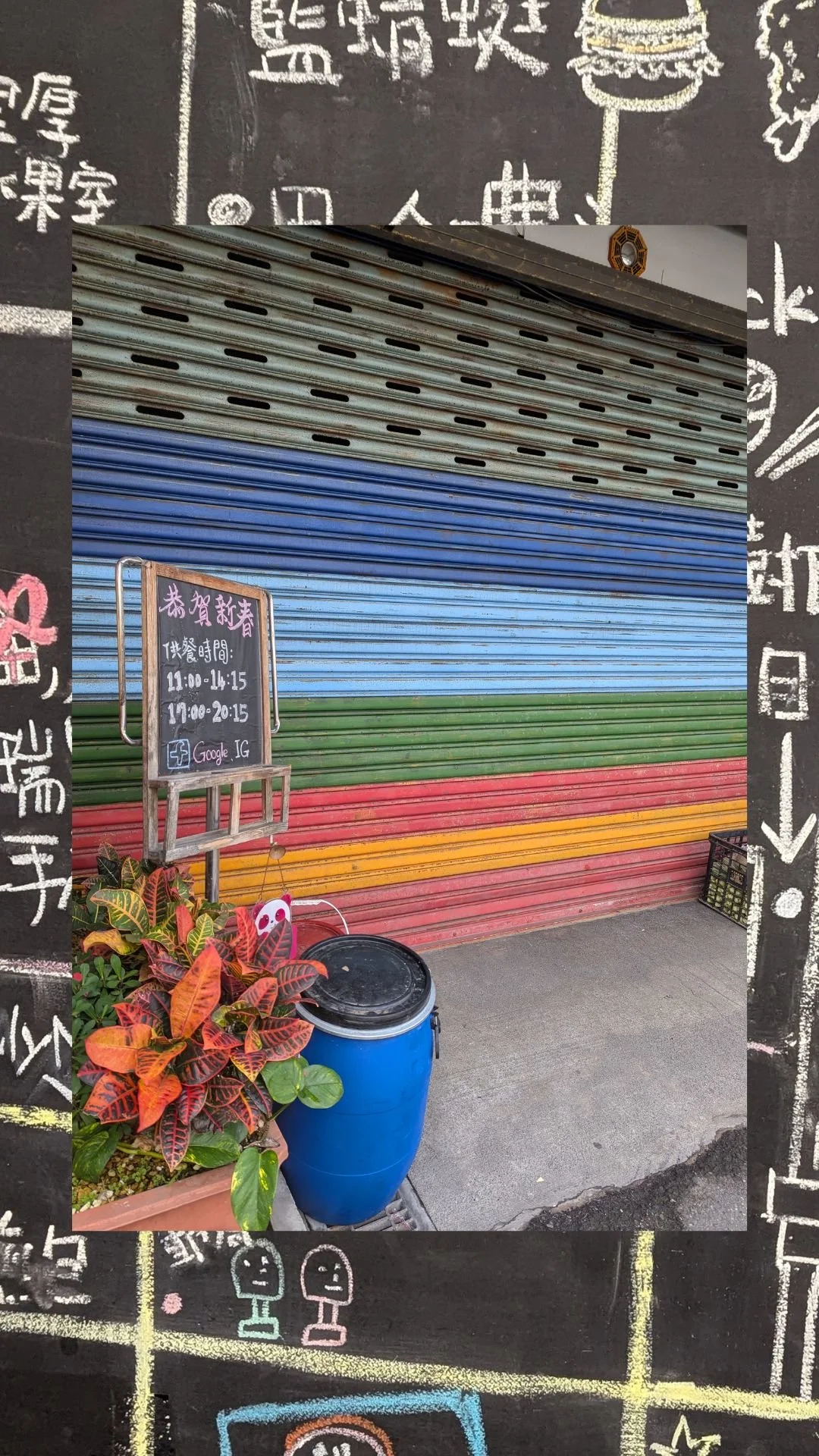
Leaves and rainbows.
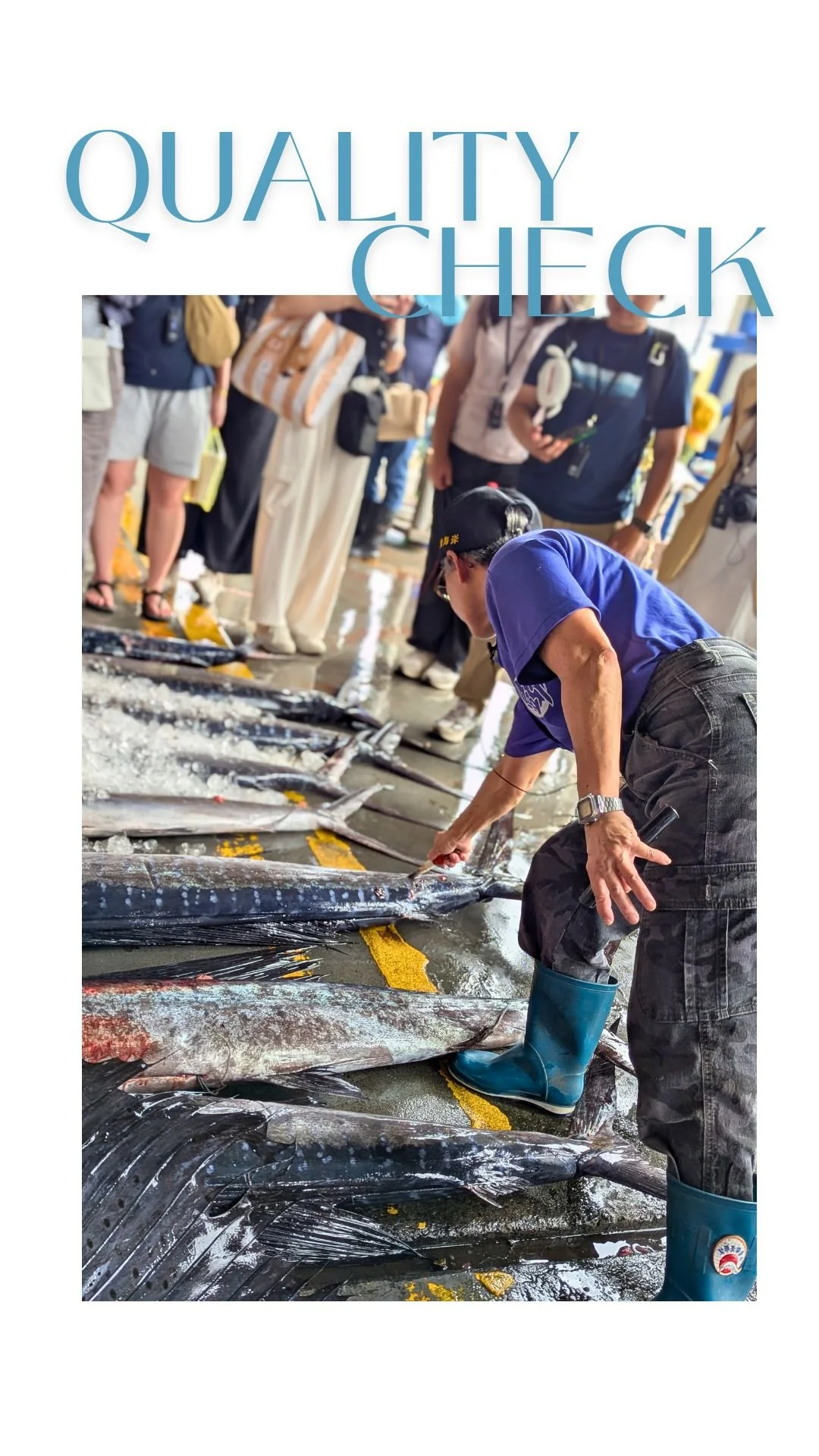
Chenggong Fish Harbor (成功漁港) is still home to a lively fishing scene, with a local fish auction taking place around noon.
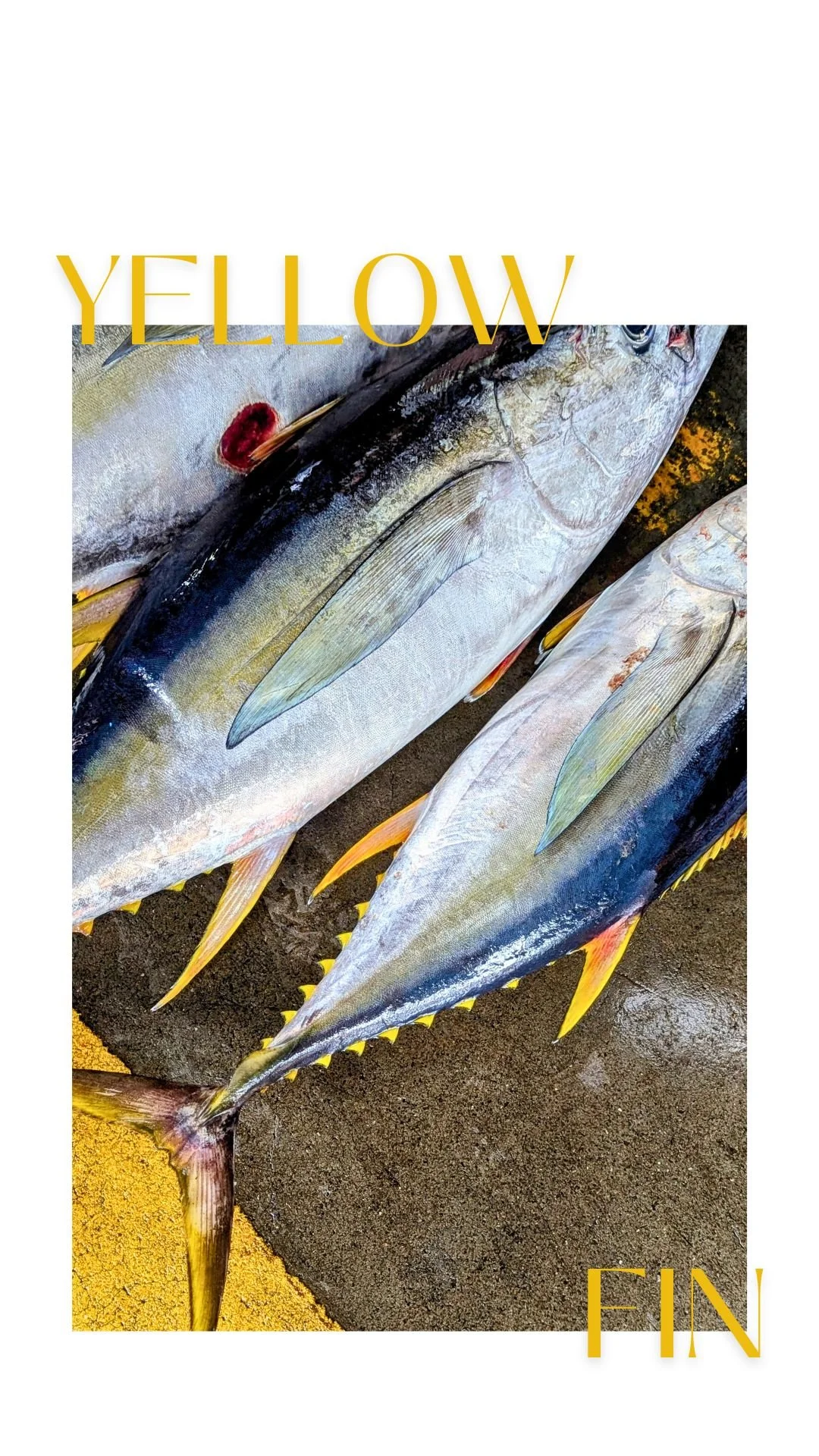
Yellowfin tuna is a prized catch in Chenggong Fish Harbor (成功漁港).
The fish auction in Chenggong (成功) takes place right on the pier.
Chenggong Harbor (成功漁港) is famous for its high-quality marlin and swordfish.
Shades of blue and purple against the backdrop of blood during the fish auction.
Fishermen resting after their shift at Chenggong Harbor (成功漁港).
The locals have, throughout the years, kept the fishing knowledge alive in Chenggong, and you'll often see them going around with a probe to testthe quality of the flesh before purchasing the best catch.
The 2025 spring edition of the Taitung Slow Food Festival took place at the Chenggong Coast Park (成功鎮海濱公園). Events, tours of the town, producers and restaurants welcomed visitors from all over Taiwan and abroad.
Millet has historically served as the staple food in the region, either steamed or served in porridge form as it was in this case, topped with smoked bonito flakes from Chenggong, roselle buds and edible flowers, all wrapped in a foraged leaf used as a bowl.
Local ingredients and spices, like 火蔥 (fire onion), a small onion characterised by a very pungent taste, and 刺蔥, prickly ash, whose seeds and leaves are both used as seasonings.
A one-off dish from 拾事·食室|fourteen x food, a newly opened restaurant in Longchang, close to Donghe. A worthy detour just a 5-minute drive South of Paul Chiang Art Centre. They focus on locally produced and foraged ingredients, with grilled rice balls being their signature dish.
I often find myself thinking about the fried rice ball with roselle which was the first dish from GraceKitchen (私廚& 蛋糕預定) that I tried 3 years ago. This time it was dessert, a carrot cake with prickly ash cream cheese frosting that was a perfect mid-afternoon pick-me-up sitting by the ocean.
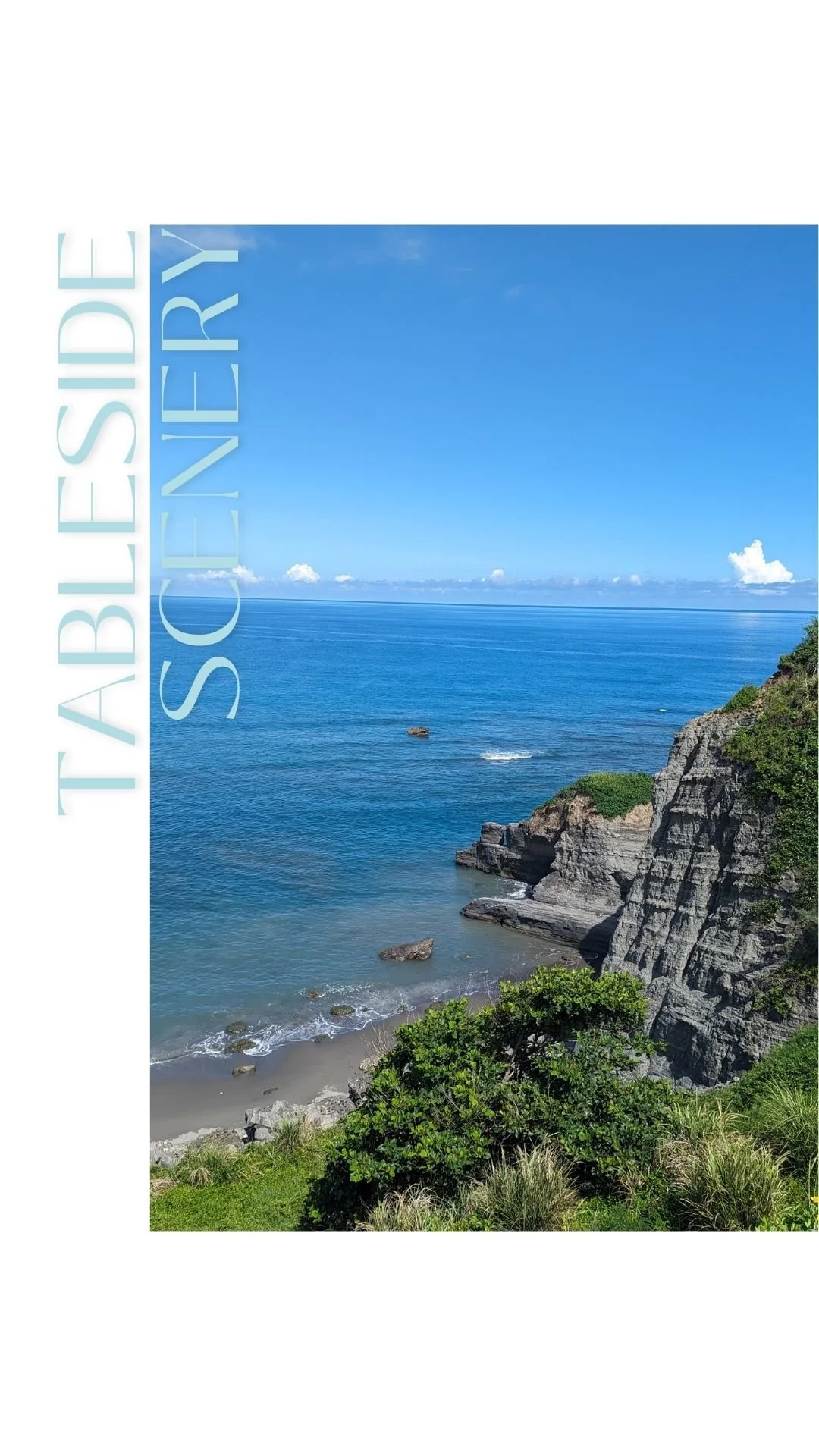
Pebbles and gentle waves on the Pacific Coast.
After meeting in 2023 in Taitung and 2024 in Turin, Italy, seeing Yu-Pin was as lovely as usual. He's a local seafood expert and the owner of Meet Marlin, the fish restaurant right on Chenggong Harbour.
Goose barnacles prepared by Yu-Pin and his wife. You're supposed to snap off a corner of the shell and dig through it with your fingers to pry off the morsel of flesh from within. A sweet hybrid of crab and mussel.
Green plums and soy beans, just one fermentation step away from greatness.
日出禾作 is an organic farm in Guanshan that focuses on organic short-grain rice and coffee. After a period away from home studying agriculture, the owner came back to his village and started to focus on Amis traditional dishes such as siraw, strips of pork belly that are fermented in rice wine lees.
Patterns and local bags in downtown Taitung.
The market in Chenggong, with perky taro amongst other produce.
Siraw can be made with more than just pork, and fish is an obvious choice in a harbour town. The red lids are a common sight.
Roadside lounging.
The salt takes a toll on a car that's parked by the ocean.
At Bar Osmanthus (木犀) the owner, Man, takes great pride in using local ingredients to bring her visions to life. She likes to experiment with French ad Italian techniques to cook what the local forest and the ocean have to offer.
A delicate mahi mahi steak, lightly torched, with local sautéed greens at Bar Osmanthus (木犀).
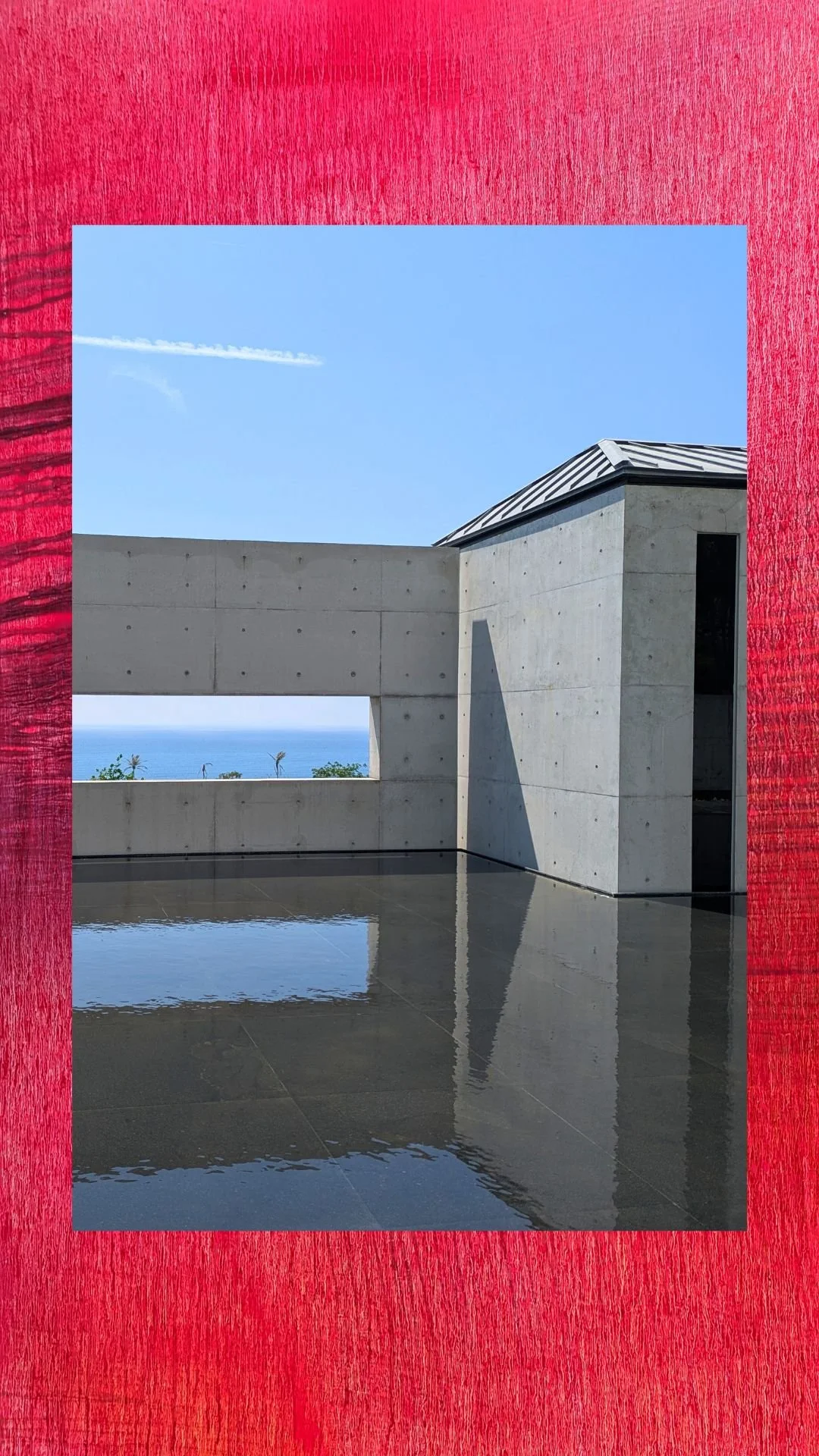
Between the mountain and the ocean, Paul Chiang Art Centre in Taitung.
Looking out towards the ocean from Paul Chiang Art Centre in Donghe.
Another reunion, and my first time visiting Sho and Jonannes's restaurant in Luye. Chubby Rabbit (恰比兔子), with its lovely logo.
Johannes at Chubby Rabbit (恰比兔子) likes to smoke his swordfish in-house, using it as a topping for a Taiwanese-inspired pizza that combines the smoked fish with fresh cheese and magao, a local spice from the litsea family.
愛玉 is native to Taiwan. A vine in the same family as figs, its fruits need to be dried in the sun before removing the seeds that will later be used to make jelly thanks to their high pectin content. Handling the freshly harvested fruit requires caution since the sap that leaks out of the skin makes your skin burn.
癡愛玉 is a café in Guanshan (關山) that focuses on aiyu jelly. They make it daily and serve it cold with their own homemade pineapple syrup, another product that's typical of the region.
Luye (鹿野) is known for its vast plateau that is perfect for growing a variety of crops, with pineapple being one of the most prized.
Pineapple fields in the night.
Just outside of Luye, Imagine Taitung is a hub where tea and food producers in the area can showcase their products.
A specialty of Luye (鹿野), taitung red oolong ( 野紅烏龍) goes through a heavier oxidation process than regular oolongs, getting close to black tea territory. It's then rolled and pan-fired like an oolong. Amber red in the cup. with an aromatic profile that combines deep floral and fruity notes.
Pineapples are sheltered from the birds using paper bags in Luye (鹿野).
宏昌客家菜館 is a Hakka restaurant in Chishang. No menu and only open upon reservation, the restaurant represents the Hakka community in Taitung, concentrated mostly around the Chishang and Guanshang areas.
Hakka braised chicken, served whole as a symbol of respect to the guests, on a bed of seasonal local vegetables.
Braised pork belly and steamed aubergines at 宏昌客家菜館, Hakka restaurant in Chishang.
Asparagus beer. Taiwan has a thing for asparagus, with asparagus juice being readily available in the fridge section at most convenience stores. Here, the juice is combined with locally produced beer for a combination I would've never come up with on my own.
Hats and hugs.
Pig blood soup and scallion pancakes at 徑廣東路蔥油餅 on Guangdong road in Taitung City. The pig blood soup is light and surprisingly refreshing.
Mitaimu (米苔目) is one of the traditional dishes in Taitung. Chewy noodles made with rice and sometimes tapioca starch, served in a savoury soup or dry with just a dash of bonito broth. Usually topped with minced pork and bonito flakes. Rong Shu Xia Rice Noodles (榕樹下米苔目) is one of the staples in Taitung.
Improvised semi-homemade dinner, with instant noodles and some dressed silken tofu.
Hamtaro. Just that.
When you want to visit a restaurant specialising in duck meat (四方鵝肉), make sure you get there early. The sweet potato noodles, minced pork rice and the braised milkfish heads were a worthy fallback.
Heads at the market.
Guts at the market.
Peugeots from a bygone era.
A touch of rust.
Poster marks.
Exploring Taitung has never been easier. Discover the rich traditions of the region, its history and the gastronomic events to showcase local products. Build your itinerary and choose to travel slow to appreciate all that Taitung has to offer.